


Shakira's Waka Waka True Meaning and Lyrics in English: From Cameroon’s Military Marches to World Cup Anthem
The artist is ready to unveil her new anthem, 'Dai Dai,' but first, let’s revisit where her deep connection to the tournament began
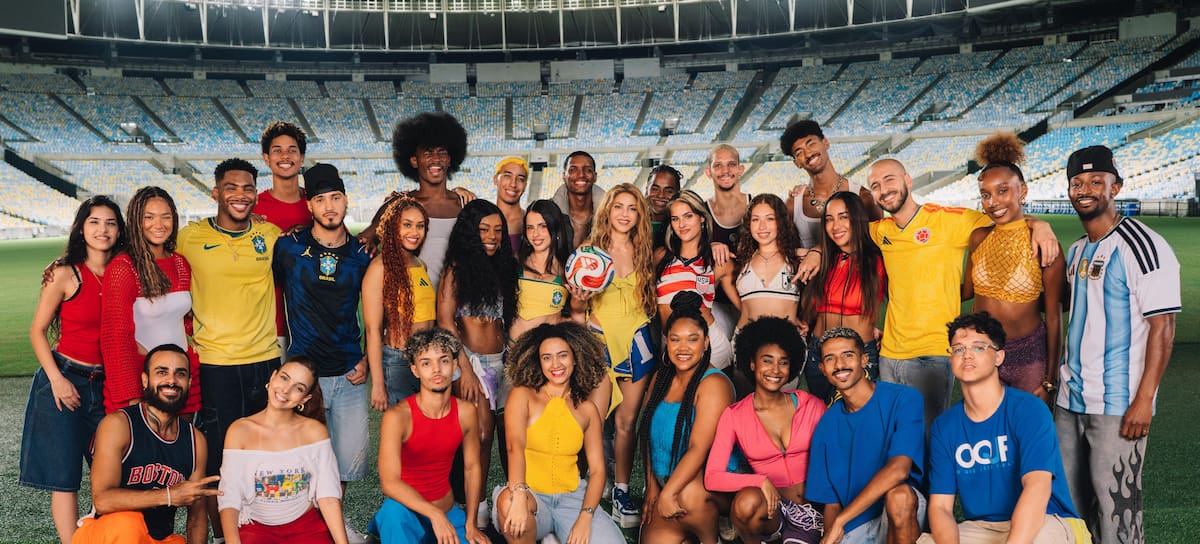
Shakira poses with her team on the set of the “Dai Dai” music video / Chris Cornejo

Periodista en LOS40; coordino LOS40 USA y escribo también en El País. Cultura y música con enfoque investigativo y social, con foco en EEUU y música latina y urbana. Antes en NYT y The Guardian.
When Shakira released Waka Waka (This Time for Africa) as the official song of the 2010 South Africa World Cup, the track instantly became a global phenomenon.
Its infectious rhythm, blending pop with African sounds, defined a generation and ultimately became the most iconic World Cup anthem in history.
However, behind the catchy “Tsamina mina, eh eh” lies a much deeper story connected to the culture and collective memory of Cameroon.
What Does “Waka Waka” Really Mean?
Although millions of people sang the song for years without knowing its meaning, the expression “Waka Waka” comes from the Fang language, spoken in Cameroon and other parts of Central Africa. It can be interpreted as “do it” or “you can do it,” a motivational phrase.
Meanwhile, the famous chorus “Tsamina mina zangalewa” has roots in old Cameroonian military chants and can roughly be translated as “Where do you come from?” The phrase was used by soldiers during marches and training exercises, eventually becoming part of African popular folklore.
A Song Born During World War II
The melody’s origins trace back to Cameroonian troops who participated in World War II. Soldiers used these rhythmic chants to maintain morale and coordination during long military marches.
Decades later, in 1986, the Cameroonian group Golden Sounds popularized the song under the name Zangalewa. The track became such a major hit across Africa that the band eventually adopted the song’s title as its artistic identity.
The military-inspired aesthetic, synchronized dances, and festive tone of the original version ultimately turned it into an African cultural symbol that transcended generations.
A Historic Legacy for the World Cup
More than 15 years after its release, Waka Waka is still considered the most iconic song in World Cup history. The official music video has surpassed 3 billion views on YouTube and continues to be played in stadiums, sports celebrations, and playlists around the world, as well as throughout Shakira’s hugely successful Las Mujeres Ya No Lloran World Tour.
The song’s cultural impact was so powerful that it strengthened Shakira’s connection with the world of football.
Now, the artist will return to the World Cup stage in 2026 with Dai Dai, a collaboration with Burna Boy that will serve as the official anthem for the tournament hosted by the United States, Mexico, and Canada.