


What’s Going On in Los Angeles? Behind the Riots and Curfews
The raids are part of President Donald Trump’s renewed effort to increase deportations
LOS ANGELES, CALIFORNIA - JUNE 11: Protesters move through Chinatown as they continue to march and chant in an approximately one-square mile area of downtown Los Angeles in response to a series of immigration raids, on June 11, 2025 in Los Angeles, California. Protests escalated after President Donald Trump authorized military forces to protect federal property against the wishes of city and state officials who say that the Los Angeles police have the expertise and decades of experience to handle large protest crowds. National Guard troops have so far played no role in quelling violence in the streets, according to Mayor Bass, but are stationed to guard federal buildings. (Photo by David McNew/Getty Images)
Los Angeles is going through one of its most intense weeks in recent years, following a series of immigration raids that have sparked major protests, clashes with law enforcement, and growing tension between the federal government and local leaders.
What sparked the unrest? It all started on Friday, June 6, when ICE, along with the FBI and Homeland Security (HSI), carried out coordinated raids in different parts of the city. They focused on workplaces like textile factories and home improvement stores. They arrested more than 100 people for alleged immigration violations and using fake documents, according to CNN and other national outlets.
The raids are part of President Donald Trump’s renewed effort to increase deportations, especially after facing criticism for not delivering on his immigration promises.
Protests and police response
The community responded quickly. People began gathering in front of federal buildings in downtown L.A., and protests later spread to neighborhoods like Paramount and Compton. While many of the demonstrations were peaceful, some ended in confrontations with police. Officers used tear gas, non-lethal rounds, and flashbang grenades to break up the crowds.
The federal government declared several of the protest gatherings in Los Angeles “illegal” and ordered the deployment of 2,000 National Guard troops and 700 Marines—without the approval of California Governor Gavin Newsom, who called the move a “violation of state sovereignty.”
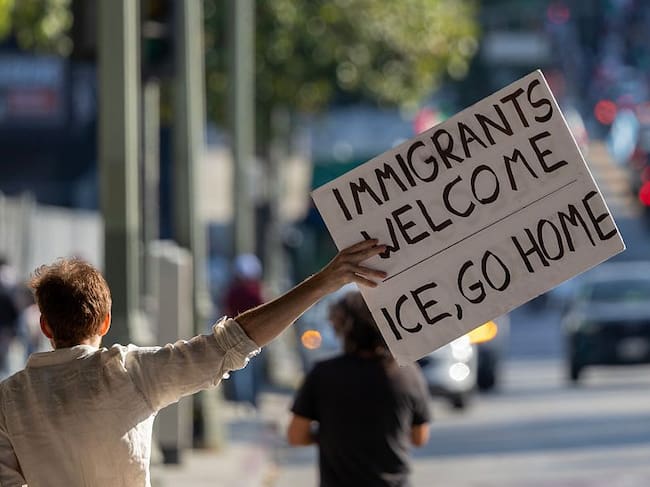
Protesters continue to march and chant in an approximately one-square mile area of downtown Los Angeles. In response to a series of immigration raids, on June 11, 2025 in Los Angeles, California. (David McNew/Getty Images)
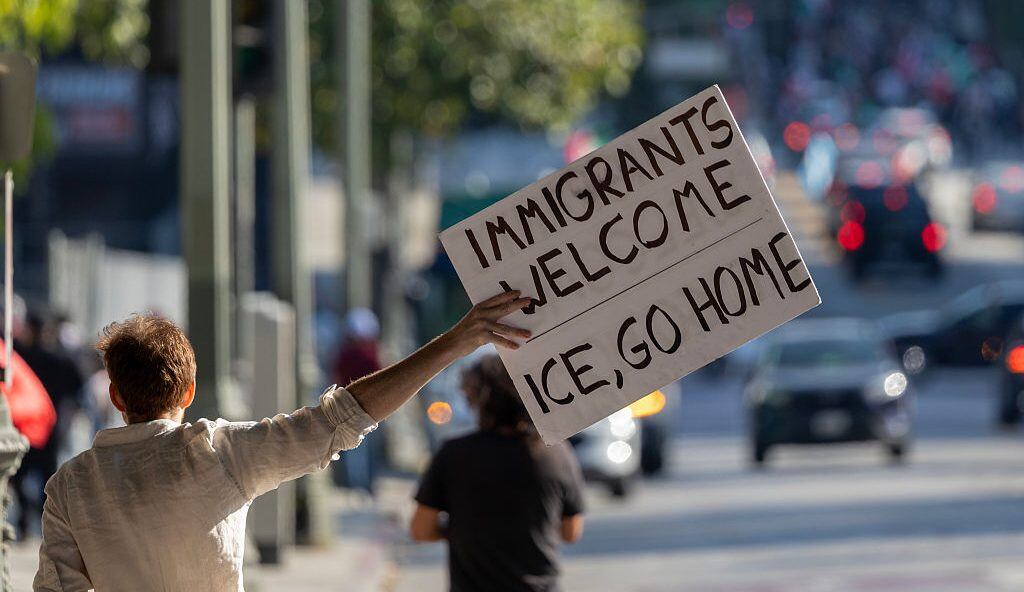
Protesters continue to march and chant in an approximately one-square mile area of downtown Los Angeles. In response to a series of immigration raids, on June 11, 2025 in Los Angeles, California. (David McNew/Getty Images)
A Sanctuary City Under Pressure
Since November 2024, Los Angeles has been officially recognized as a “sanctuary city”—meaning local authorities do not assist in enforcing federal immigration policies. This position has been heavily criticized by the Trump administration, which had already warned of potential retaliation.
Curfews, Arrests, and Rising Tensions
As of June 11, more than 300 people have been arrested in connection to the protests. Mayor Karen Bass responded by issuing a curfew in downtown L.A., while reports continue to surface of injuries among protesters, police officers, and even animals used in crowd control operations.
President Donald Trump defended the military response, saying the situation was “out of control” and now “moving in the right direction.” Still, civil rights organizations, local leaders, and news outlets have criticized the use of excessive force and accused officials of exaggerating the level of violence in the protests.