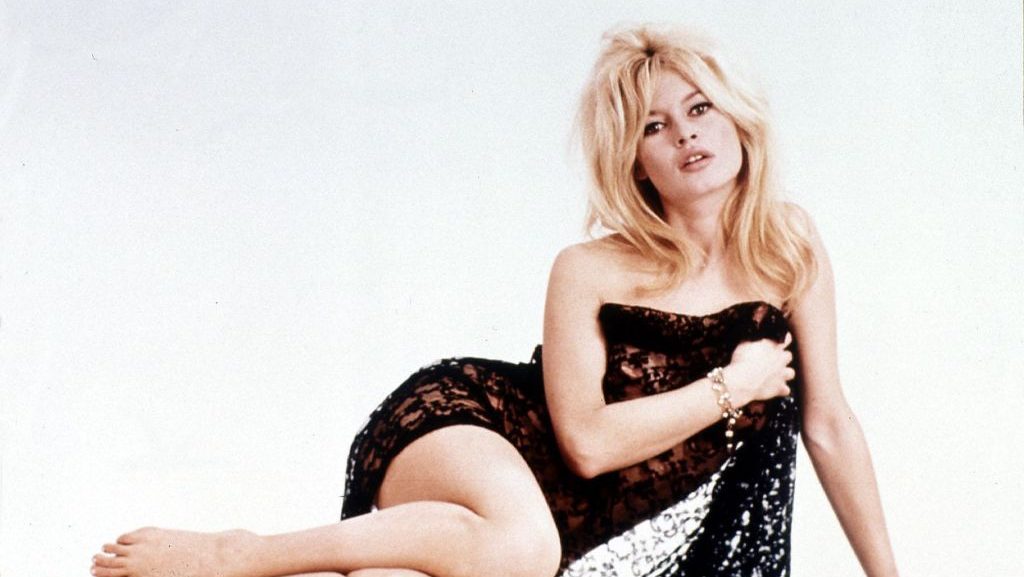
Brigitte Bardot, the legendary French actress and symbol of freedom, passed away on Sunday at the age of 91, leaving behind a complex legacy that transcends cinema. Bardot was not just a film icon; she fundamentally changed how women were represented on screen. She altered the portrayal of female sexuality and independence in ways that are still felt today.
Born on September 28, 1934, in Paris to a strict, Catholic family, Bardot’s early years were shaped by discipline, with physical punishments and a tightly controlled social life. During the German occupation of France, she found solace in ballet, a passion that eventually led her to the Paris Conservatory.
However, it wasn’t until she was 15 that she truly sought to break free from her constraints and express herself authentically. Her opportunity came when she appeared on the cover of Elle, shaking up post-war France with her long hair, athletic figure, and natural style, a stark contrast to the more conventional beauty ideals of the time. In a matter of months, she became the face of French youth.
Her entry into cinema came through the guidance of director Roger Vadim, who not only discovered her but also shaped her public image and became her first husband. Their marriage, which began when she was just 18, was marked by controversy.
A Revolutionary Icon
In the world of cinema Bardot redefine female eroticism in films like And God Created Woman (1956), making her a global sensation. Her portrayal of sensuality and freedom was shocking, especially in the United States, where her character was seen as a moral threat, and in France, where she was labeled «immoral from head to toe.»
Despite becoming France’s highest-paid actress and an invaluable cultural figure, Bardot was always frustrated by being typecast. “I’ve always had to undress,” she once lamented. It was Jean-Luc Godard who gave her the chance to showcase her dramatic talent in Le Mépris (1963), but her career after that was uneven. Both Hollywood and Europe struggled to fit her into their molds, as she was too free-spirited and unconventional for the traditional cinema industry.
Her Retirement From Acting
In 1973, at the age of 39, Bardot made the radical decision to retire from acting. She sold her jewelry and personal belongings and founded the Brigitte Bardot Foundation, dedicating her life to animal rights.
She became a vegetarian and publicly denounced practices such as seal hunting in Canada, horse meat consumption in France, and the mistreatment of bears in China. Her commitment to these causes became a defining part of her life, with her famous quote, “I gave my beauty to men. Now I give my experience to animals”.
However, over time, her public persona grew increasingly radical, as she began to make controversial statements about religion, immigration, and race.
Brigitte Bardot leaves behind a legacy that is both revolutionary and divisive. She changed the way women were portrayed in cinema, breaking free from traditional roles to embrace a more liberated, provocative image. Bardot’s story is one of both immense freedom and intense solitude—a paradox that defines not just her life but also the way she will be remembered. She was, in every sense, unforgettable.
Article is also available in Spanish


 USA
USA
 ES
ES
 MX
MX
 CO
CO
 CH
CH
 PA
PA
 ARG
ARG
 CR
CR
 GUA
GUA
 EC
EC
 RD
RD